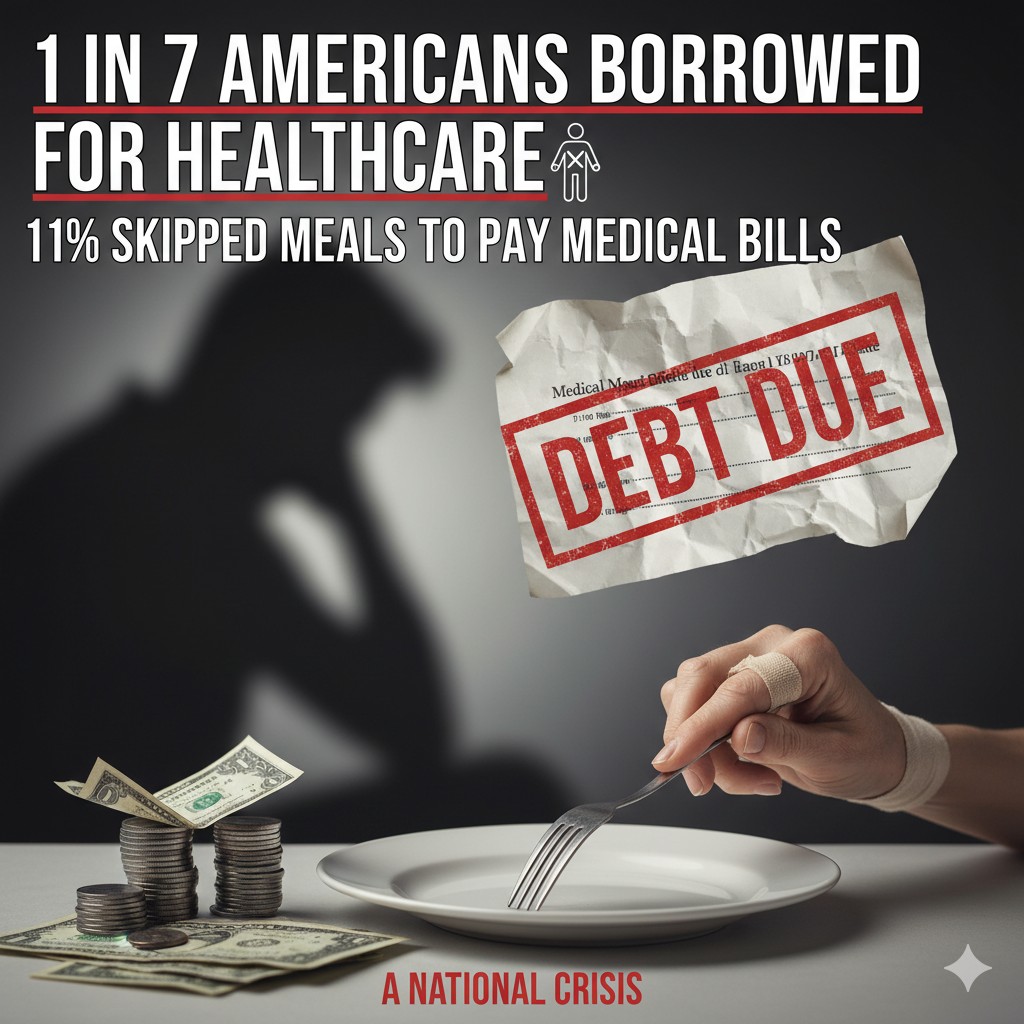
“A recent nationwide survey reveals that approximately one in seven American adults borrowed money in the past year to cover healthcare expenses, while 11% skipped meals or made similar sacrifices to afford medical bills. Overall, one-third of adults — equating to more than 82 million people — have cut back on daily living costs to manage healthcare affordability, with uninsured individuals facing the most severe trade-offs.”
Healthcare Affordability Crisis Hits Home for Millions
The financial strain of healthcare costs continues to force everyday Americans into difficult choices that affect basic needs and long-term stability. A comprehensive survey of nearly 20,000 adults highlights how widespread these burdens have become, even as most people have some form of insurance.
About 15% of respondents — roughly one in seven adults — reported borrowing money over the past year specifically to pay for medical expenses. This borrowing often involves credit cards, personal loans, or family assistance, adding interest and further debt pressure to households already navigating rising living costs. For context, earlier data showed that in the previous year, around 12% of adults borrowed an estimated $74 billion collectively for similar reasons, indicating a persistent and growing pattern.
Even more strikingly, 11% of adults admitted to skipping a meal in the past year to free up funds for healthcare payments. This figure translates to approximately 28 million people making the stark choice between nutrition and medical care. The same percentage reported intentionally driving less to save on gas and redirect those savings toward bills. Other common cutbacks include reducing utility usage (9%) and stretching prescription medications by prolonging doses or skipping refills (around 14-15%).
These sacrifices are not limited to lower-income groups. While they are more prevalent among those earning less than $24,000 annually — where over half report at least one trade-off — the issue spans income levels. In middle-income households ($90,000-$120,000), about a quarter have made similar adjustments, and even in higher-earning brackets ($240,000+), around 11% report cutting back on essentials to cover care. This broad impact underscores that healthcare expenses remain a middle-class concern as well.
The uninsured bear the heaviest load. Among those without coverage, 62% have made at least one financial sacrifice to afford care. Within this group, 32% borrowed money, and 24% extended their current prescriptions to avoid the cost of refills. In contrast, insured individuals still face challenges, with 9% skipping meals and similar proportions borrowing or rationing drugs.
Broader trade-offs extend beyond daily expenses. Many Americans delay major life decisions due to healthcare costs, including postponing surgeries, buying homes, or retiring. Over a quarter have delayed medical treatment, while others hold off on significant purchases or life milestones.
The root causes tie into ongoing trends in healthcare spending, which reached trillions annually and continues to grow faster than overall economic expansion. High deductibles, copayments, premium increases, and the expiration of enhanced subsidies have compounded the pressure. As more people confront these realities, the choices become more desperate — from forgoing preventive care to risking health by rationing medications.
This situation highlights a systemic issue where even routine or moderate medical needs can destabilize household budgets. The pattern affects not just immediate finances but also physical well-being, as skipped meals and delayed care contribute to worsening health outcomes over time.
Key Statistics from the Survey
Borrowing for Healthcare : 15% of adults (≈1 in 7) borrowed money in the past year.
Skipping Meals : 11% skipped a meal to pay medical bills (≈28 million people).
Driving Less : 11% reduced driving to save money for healthcare.
Prolonging Prescriptions : 14-15% stretched medications or delayed refills.
Overall Trade-offs : One-third of adults (≈82 million) made at least one cutback in daily expenses.
Uninsured Impact : 62% made sacrifices, including 32% borrowing and 24% rationing drugs.
These figures paint a picture of a nation where healthcare costs routinely force compromises in quality of life, affecting tens of millions across demographics and insurance statuses.
Disclaimer : This is a news report based on recent survey findings and related data. It is for informational purposes only and not financial, medical, or legal advice.