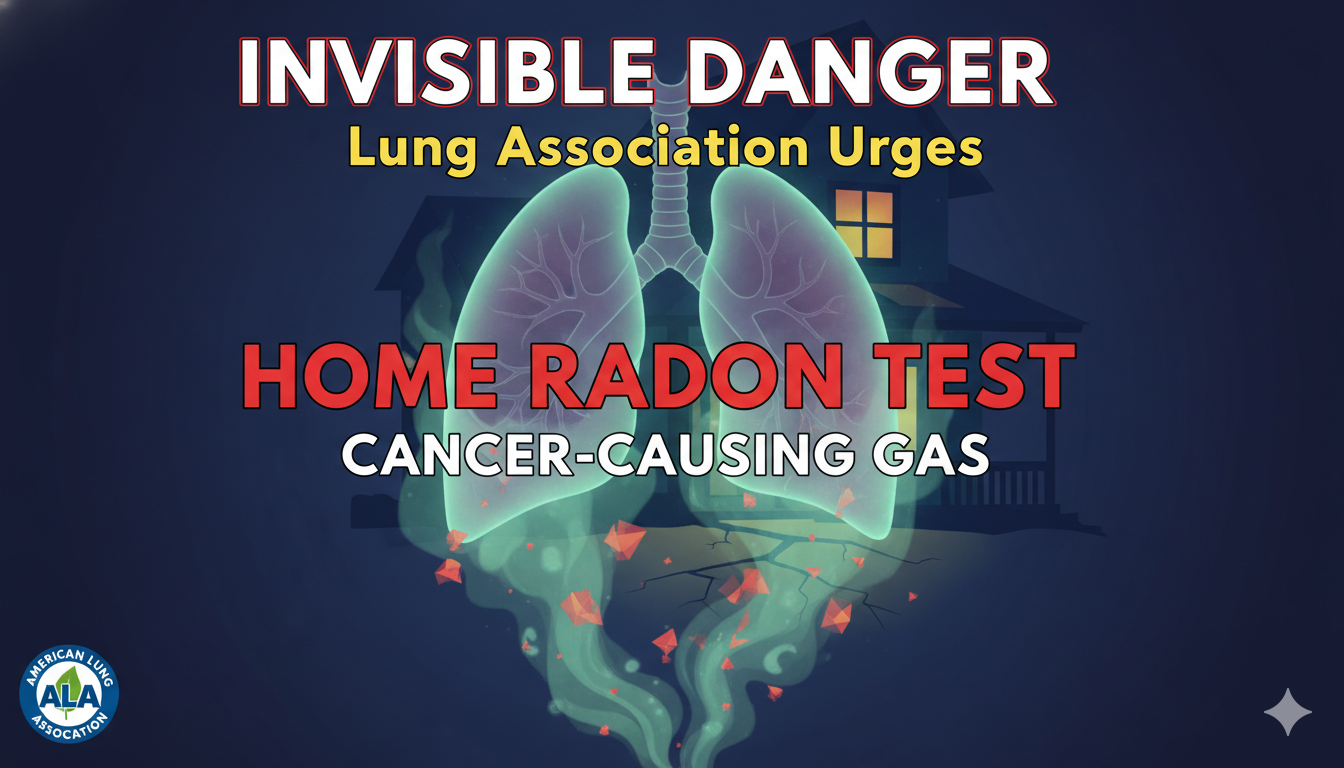
As January marks National Radon Action Month, health experts are intensifying calls for Americans to test their homes for radon, a colorless, odorless radioactive gas responsible for an estimated 21,000 lung cancer deaths annually. It ranks as the second leading cause of lung cancer overall and the top cause among nonsmokers, with about one in 15 U.S. homes showing levels above the EPA’s action threshold of 4 pCi/L. Testing remains the only way to detect this hidden threat, and affordable kits make protection accessible. (62 words)
The Silent Threat in American Homes
Radon emerges naturally from the breakdown of uranium in soil, rock, and water, seeping into buildings through foundation cracks, gaps around pipes, and other openings. Invisible and undetectable without testing, it can accumulate to dangerous levels indoors regardless of a home’s age, construction type, or location—even in well-sealed modern buildings or those without basements.
Nationwide, radon contributes to thousands of preventable lung cancer cases each year. When combined with smoking, the risk multiplies dramatically, elevating lung cancer odds by factors of 10 or more. Nonsmokers face significant danger too, as radon stands as their primary environmental lung cancer trigger.
Radon Risk Across the Nation
Elevated radon appears in every state, but prevalence varies widely. Approximately one in 15 homes exceeds the EPA’s 4 pCi/L action level, prompting recommended mitigation. In higher-risk areas, the fraction can reach one in three.
| State | Average Radon Level (pCi/L) | Notes on Risk |
|---|---|---|
| Alaska | 10.7 | Highest national average |
| South Dakota | 9.6 | Significant portions exceed action level |
| Pennsylvania | 8.6 | About 40% of tested homes elevated |
| Ohio | 7.8 | Widespread high readings |
| Washington | 7.5 | Influenced by geology and glaciers |
| Kentucky | 7.4 | Up to 37% of tests above threshold |
| Montana | 7.4 | Rocky terrain contributes |
| Idaho | 7.3 | Elevated in many regions |
| Colorado | 6.8 | Nearly half of tests high |
| Iowa | 6.1 | Midwest hotspot |
These averages highlight broader trends, though individual homes—even next-door neighbors—can differ sharply due to local soil conditions and building features.
Why Testing Matters Now
Winter months often see higher indoor radon buildup as homes stay closed for heating, trapping the gas. Short-term tests, lasting 2-7 days, provide quick insights, while longer ones over months offer more precise annual averages.
Do-it-yourself kits remain widely available at hardware stores, online retailers, or through health organizations, typically costing $10-40 including lab analysis. Some areas offer discounted or free kits during awareness campaigns. Place tests in the lowest lived-in level, away from drafts or humidity.
If results hit 4 pCi/L or above, professional mitigation—often a vent system drawing gas from beneath the foundation—can reduce levels effectively, usually bringing them below 2 pCi/L.
Steps to Protect Your Household
Every homeowner should test periodically, especially after renovations, new occupancy, or if never checked before. Retesting every two years, or more often with an existing mitigation system, ensures ongoing safety.
Simple actions like sealing visible cracks and improving ventilation help, but testing drives informed decisions. Reducing exposure saves lives and cuts long-term health risks substantially.
Disclaimer: This article is for informational purposes only and does not constitute medical, legal, or financial advice. Consult qualified professionals for personalized guidance.