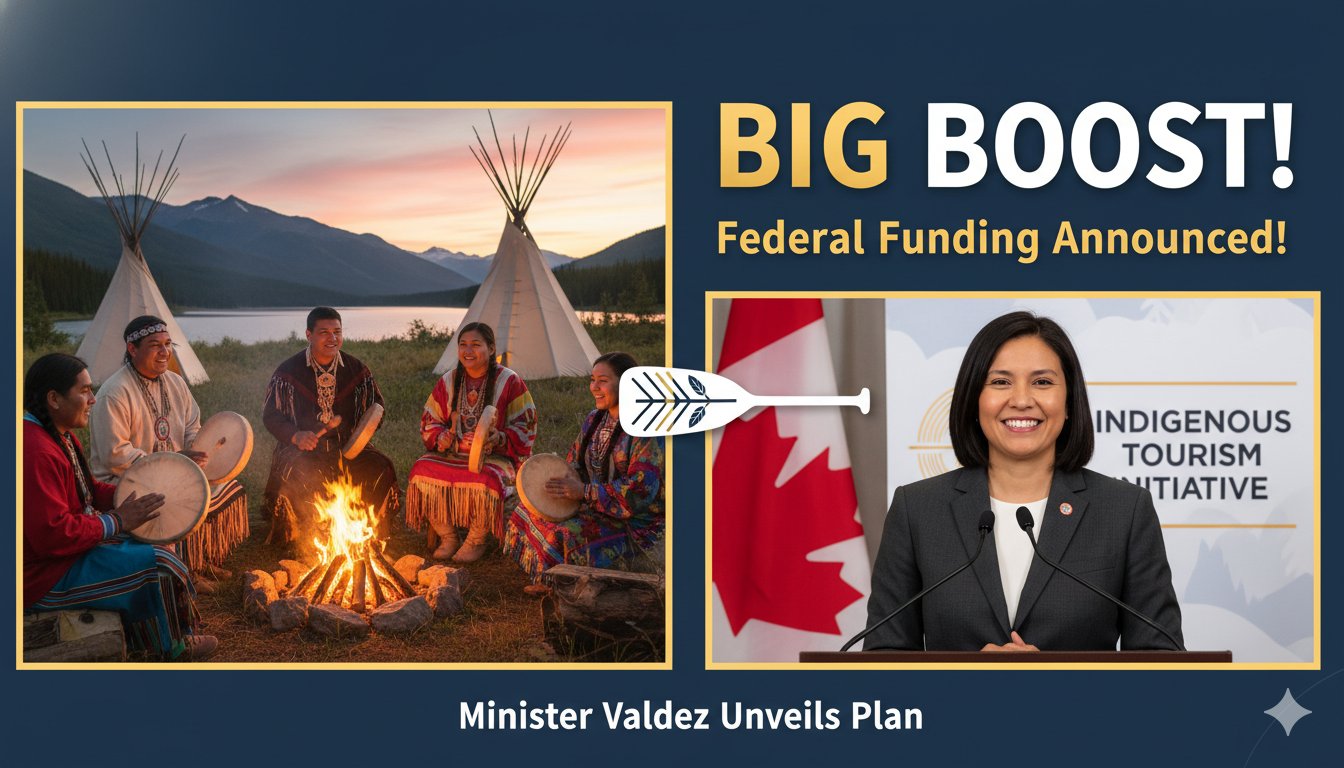
“In a significant move to support economic reconciliation and cultural preservation, Minister Rechie Valdez has announced an additional $6 million in federal funding for the Indigenous Tourism Fund’s Signature Indigenous Tourism Experiences Stream (SITES). This investment, stemming from Budget 2025, will scale up high-impact, export-ready Indigenous-led tourism projects nationwide, building on prior successes and contributing to broader government commitments exceeding $50 million in recent years for the sector.”
Federal Boost for Indigenous-Led Tourism Experiences
The Honourable Rechie Valdez, serving as Minister of Women and Gender Equality and Secretary of State (Small Business and Tourism), recently highlighted a targeted federal investment aimed at expanding authentic Indigenous tourism offerings. Announced at the Millbrook Cultural and Heritage Centre in Nova Scotia, the funding focuses on the Signature Indigenous Tourism Experiences Stream (SITES), administered through the National Aboriginal Capital Corporations Association (NACCA) in collaboration with Innovation, Science and Economic Development Canada.
This $6 million allocation represents a direct follow-up to the program’s pilot phase, which successfully deployed resources to 11 Indigenous tourism projects in 2025. The new tranche will enable a fresh cohort of flagship initiatives that emphasize community-supported, sustainable, and market-viable experiences. These projects are designed to showcase Indigenous cultures, languages, lands, and histories while generating long-term economic benefits for First Nations, Métis, and Inuit communities.
The initiative aligns with Budget 2025 priorities, which renewed support for Indigenous tourism as part of a broader strategy to foster inclusive economic growth. It builds upon the original Indigenous Tourism Fund, launched in 2023 with $20 million over two years to aid pandemic recovery and sector development. Combined with other federal programs like the Tourism Growth Program, total government support for Indigenous tourism has surpassed $50 million in the past three years.
Key elements of the funding include:
Scale-up of export-ready attractions : Projects must demonstrate potential to attract international visitors, ensuring long-term viability and revenue generation.
Community-driven development : Emphasis on initiatives that are supported and led by Indigenous communities to preserve cultural integrity.
Sustainable tourism models : Funding prioritizes environmentally and culturally responsible experiences that benefit local economies without compromising heritage.
Recipients of this round include a diverse set of projects spanning provinces and territories, with notable examples such as enhancements to the Mi’kmawey Debert Cultural Centre in Nova Scotia. These investments aim to create immersive visitor experiences that highlight storytelling, traditional practices, art, cuisine, and connection to the land.
Indigenous tourism has emerged as a vital differentiator in Canada’s visitor economy, drawing travelers seeking meaningful, authentic engagements. The sector contributes to job creation, skills development, and self-determination for Indigenous entrepreneurs and communities. By supporting signature experiences, the government seeks to position Canada as a global leader in cultural tourism while advancing reconciliation efforts.
This announcement underscores ongoing federal commitments to partner with Indigenous organizations. The involvement of NACCA ensures funds are distributed effectively through established networks of Aboriginal Financial Institutions, promoting equitable access and accountability.
Broader context shows Indigenous tourism recovering strongly post-pandemic, with demand for unique experiences driving growth. Investments like this help bridge gaps in infrastructure, marketing, and capacity building, enabling small- and medium-sized Indigenous businesses to compete in domestic and international markets.
The funding is expected to yield measurable outcomes, including increased tourism revenues, expanded employment opportunities, and strengthened cultural preservation. As part of a multi-year approach, it complements other initiatives and signals continued government priority on Indigenous economic participation.
Disclaimer: This is a news report based on official government announcements and public information. It is for informational purposes only and does not constitute financial, investment, or travel advice.