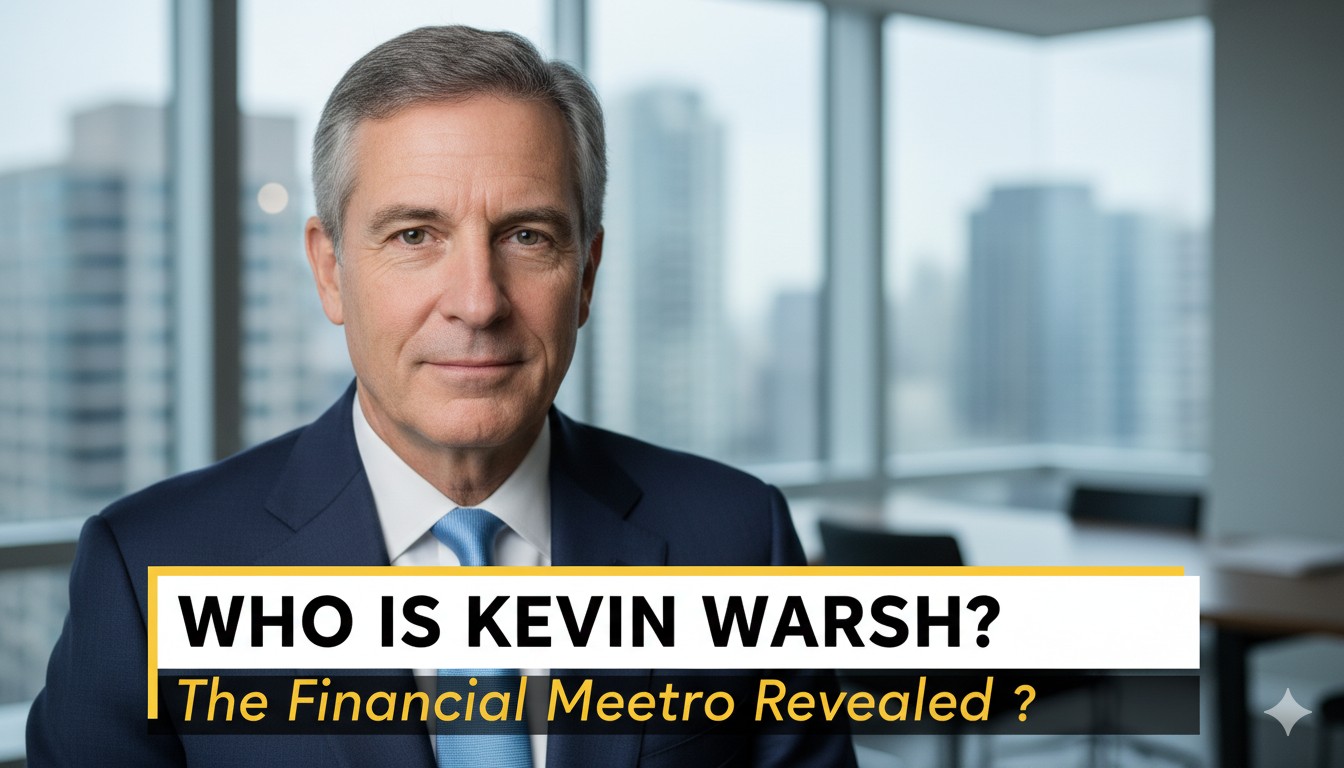
Kevin Warsh, a seasoned economist and former Federal Reserve Governor, has been nominated to lead the U.S. central bank, bringing his extensive background in finance, policy, and academia to the role. With a career spanning Wall Street, the White House, and the Fed during the financial crisis, Warsh advocates for monetary policy reforms and has critiqued the central bank’s data-driven approaches. His nomination signals potential shifts in how the Fed manages interest rates, inflation, and economic stability for American households and businesses.
Kevin Warsh stands out as a pivotal figure in American economic policy, blending hands-on experience in high-stakes finance with a sharp analytical mind honed through years of public service and scholarly work. His journey from a young investment banker to a potential Federal Reserve Chair encapsulates the intersection of private sector savvy and government oversight that defines much of U.S. economic leadership.
Early Life and Education
Born in Albany, New York, Kevin Maxwell Warsh grew up in an environment that emphasized education and public service. His early interest in economics and policy led him to pursue rigorous academic training. Warsh earned his bachelor’s degree with honors from Stanford University, focusing on public policy with an emphasis on economics and statistics. This foundation provided him with the quantitative skills essential for dissecting complex financial systems.
Following Stanford, Warsh attended Harvard Law School, where he concentrated on the interplay between law, economics, and regulatory frameworks. Graduating with a Juris Doctor degree, he emerged equipped not just with legal acumen but with a deep understanding of how policies shape markets. This educational background set the stage for a career that would navigate both the corridors of power in Washington and the boardrooms of Wall Street.
Wall Street Beginnings
Warsh’s professional trajectory began in the fast-paced world of investment banking. Joining Morgan Stanley in New York City, he quickly rose through the ranks in the mergers and acquisitions department. Starting as an analyst, he advanced to executive director, overseeing multimillion-dollar deals that involved corporate restructurings, strategic alliances, and cross-border transactions.
During his tenure at Morgan Stanley, Warsh gained firsthand exposure to the dynamics of global capital markets. He advised on high-profile mergers that influenced industries ranging from technology to consumer goods. This period sharpened his ability to assess risk, value assets, and negotiate under pressure—skills that would later prove invaluable in public policy roles. His work at the firm also introduced him to the intricacies of financial regulation, as he navigated compliance with securities laws amid evolving market conditions.
Service in the White House
In a significant pivot to public service, Warsh joined the administration of President George W. Bush. Appointed as Special Assistant to the President for Economic Policy, he also served as Executive Secretary of the White House National Economic Council. In these roles, he coordinated economic strategies across federal agencies, advising on issues like tax policy, trade agreements, and fiscal stimulus.
Warsh played a key part in shaping responses to economic challenges of the era, including efforts to bolster growth amid post-9/11 uncertainties. His contributions included drafting policy recommendations that aimed to enhance U.S. competitiveness in global markets. This experience immersed him in the political dimensions of economics, where decisions impact everyday Americans—from job creation to retirement savings.
Tenure at the Federal Reserve
Warsh’s appointment to the Federal Reserve Board of Governors marked a historic milestone; at just 35 years old, he became the youngest governor in the institution’s history. Serving from 2006 to 2011, he was thrust into the heart of the 2008 financial crisis, a period that tested the resilience of the U.S. banking system.
As a governor, Warsh participated in critical decisions on monetary policy, including interest rate adjustments and emergency lending programs. He advocated for measures to stabilize financial institutions, emphasizing the need for transparency and accountability in Fed operations. During the Great Recession, he supported initiatives to inject liquidity into markets, helping to avert deeper economic downturns that could have led to widespread unemployment and foreclosures.
However, Warsh also emerged as a vocal critic of certain Fed strategies. He questioned the prolonged use of ultra-low interest rates, arguing they could distort asset prices and encourage excessive risk-taking. His perspectives on inflation targeting and quantitative easing influenced debates within the board, pushing for a more balanced approach that considers long-term economic health over short-term fixes.
Post-Fed Career and Scholarly Contributions
| Key Milestones in Kevin Warsh’s Federal Reserve Tenure |
|---|
| Year |
| 2006 |
| 2010 |
| 2011 |
After leaving the Federal Reserve, Warsh transitioned to academia and advisory roles, where he continued to influence economic discourse. He became the Shepard Family Distinguished Visiting Fellow in Economics at Stanford University’s Hoover Institution, a think tank known for its focus on free-market principles and policy innovation.
In this capacity, Warsh has conducted extensive research on monetary policy, fiscal frameworks, and global finance. He authored reports recommending reforms to central banking practices, including a notable independent review for the Bank of England on enhancing policy effectiveness. His work emphasizes the importance of forward-looking strategies that anticipate economic shifts rather than reacting to them.
Warsh also serves as a lecturer at the Stanford Graduate School of Business, where he teaches courses on economics, finance, and leadership. His classes draw on real-world examples, helping students understand how policy decisions affect corporate strategies and investor behavior.
Beyond academia, Warsh holds influential positions in the private sector. He is a partner at Duquesne Family Office, managing investments for high-net-worth individuals. Additionally, he sits on the boards of directors for major corporations like UPS, a logistics giant, and Coupang, a leading e-commerce platform in South Korea. These roles allow him to apply his expertise to operational challenges, from supply chain efficiencies to digital market expansions.
Warsh is a member of the Group of Thirty, an elite international forum of economists and financiers that addresses global economic issues. He also advises the Congressional Budget Office through its Panel of Economic Advisers, providing insights on federal spending and revenue projections that impact U.S. taxpayers.
Advocacy for Monetary Policy Reform
Throughout his career, Warsh has been a proponent of rethinking central bank operations. He has critiqued the Federal Reserve’s heavy reliance on data models, suggesting they can lead to policy inertia. Instead, he calls for a “regime change” that incorporates broader economic indicators, such as productivity trends and geopolitical risks.
In public speeches and writings, Warsh argues that the Fed should prioritize sustainable growth over aggressive interventions. He warns against the pitfalls of prolonged asset purchases, which he believes can inflate bubbles in stocks and real estate, disproportionately affecting middle-class Americans saving for homes or education.
His views resonate with those seeking a more conservative approach to monetary policy, aligning with efforts to curb inflation without stifling innovation. Warsh’s reform ideas include enhancing communication with Congress and the public to build trust in the institution’s independence.
Recent Developments and Nomination
In a move that underscores his enduring influence, Warsh has been nominated by President Donald Trump to succeed Jerome Powell as Chair of the Federal Reserve. This nomination positions him to potentially overhaul the central bank’s strategies amid ongoing challenges like persistent inflation, supply chain disruptions, and labor market shifts.
If confirmed by the Senate, Warsh would oversee interest rate policies that directly influence mortgage rates, credit card costs, and business loans for millions of Americans. His background suggests a focus on tightening monetary conditions to foster long-term stability, potentially diverging from recent accommodative stances.
Warsh’s nomination has sparked discussions among economists and investors, with some praising his crisis-era experience and others debating his hawkish leanings on rates. As the process unfolds, his vision for the Fed could shape economic trajectories for years, affecting everything from Wall Street portfolios to Main Street budgets.
Personal Life and Networks
Warsh maintains a low-profile personal life, but his connections highlight his stature in elite circles. He is married to Jane Lauder, a prominent figure in the cosmetics industry and granddaughter of Estée Lauder. The couple has children and resides in California, balancing family with professional commitments.
His family ties extend to influential networks; his father-in-law, Ronald Lauder, is a major philanthropist and business leader. Warsh’s involvement in groups like the Bilderberg Group, where he served on the steering committee, reflects his engagement with global decision-makers on economic and security matters.
Financially, Warsh’s net worth is estimated in the multimillion-dollar range, derived from his banking career, board positions, and investments. This success underscores his acumen in wealth management, a trait that informs his policy perspectives on inequality and opportunity.
Key Points on Warsh’s Economic Philosophy
Inflation Control : Prioritizes preemptive measures to prevent runaway price increases that erode purchasing power for American families.
Regulatory Balance : Supports reforms that reduce bureaucratic hurdles while maintaining safeguards against systemic risks.
Global Perspective : Advocates for U.S. policies that strengthen competitiveness in international trade and finance.
Innovation Focus : Emphasizes the role of monetary policy in supporting technological advancements and entrepreneurship.
Transparency Push : Calls for clearer Fed communications to demystify decisions for the public and markets.
Warsh’s multifaceted career positions him as a bridge between traditional economic theory and modern challenges, making him a compelling choice for steering the U.S. economy forward.
Disclaimer: The information in this news report is based on various sources and tips.